
On Failure
Mishima, Megalopolis, and all of us.

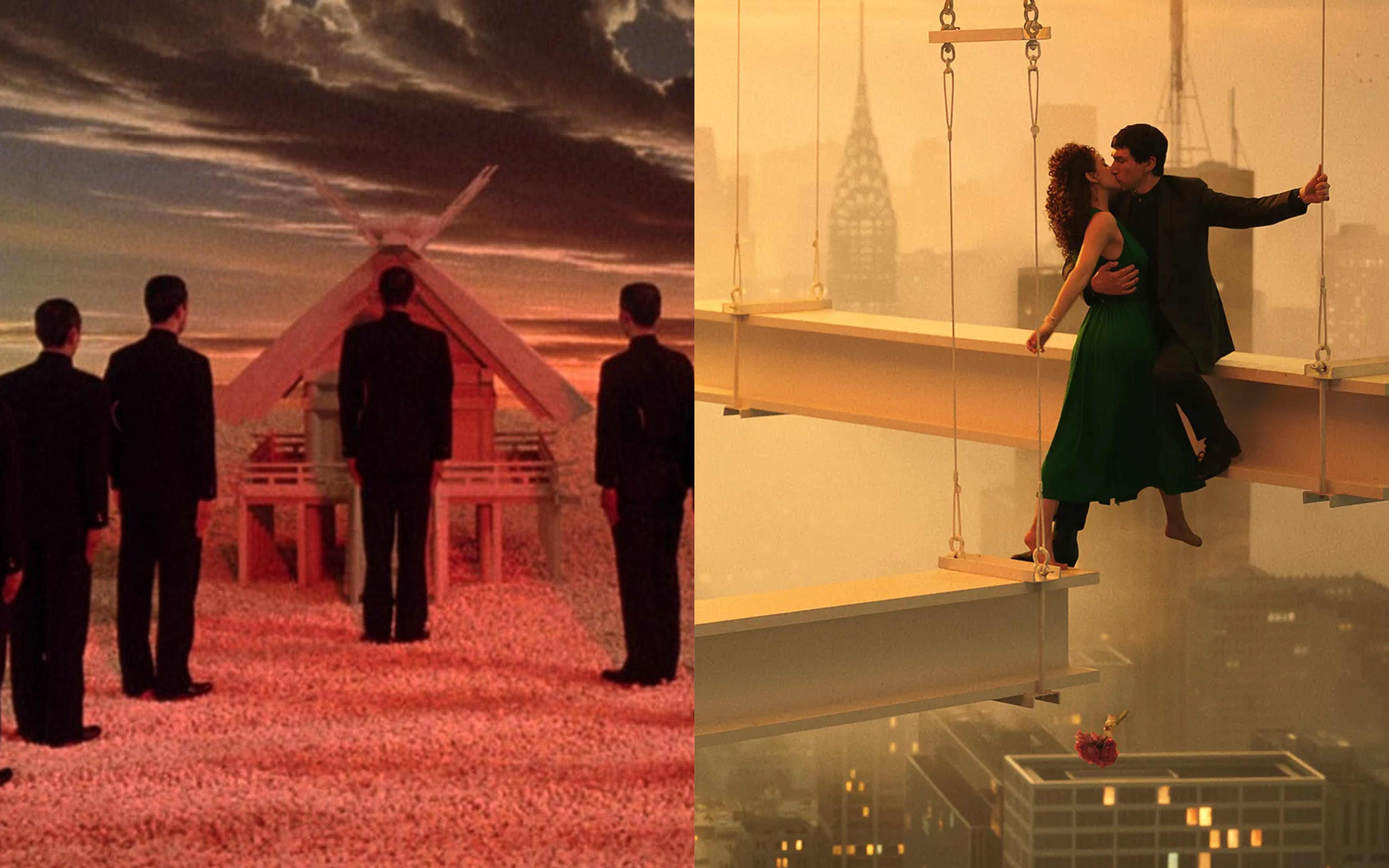
SPOILER WARNING for Megalopolis (2024) and Mishima: A Life in Four Chapters (1985).
One of the many montages in Francis Ford Coppola's 2024 self-produced 'fable' Megalopolis takes the form of a 3-way split screen slideshow of architectural renderings reminiscent of Saudi government urban planning propaganda or a new luxury multi-res advertisement one might see on St Kilda Road. Obviously hastily put-together, distinctly-computer generated, pseudo-futuristic, nature-imitating forms bathed in sickly-sweet golden light flash along the screen, eliciting the feeling of being in an architectural renderer’s bad dream.
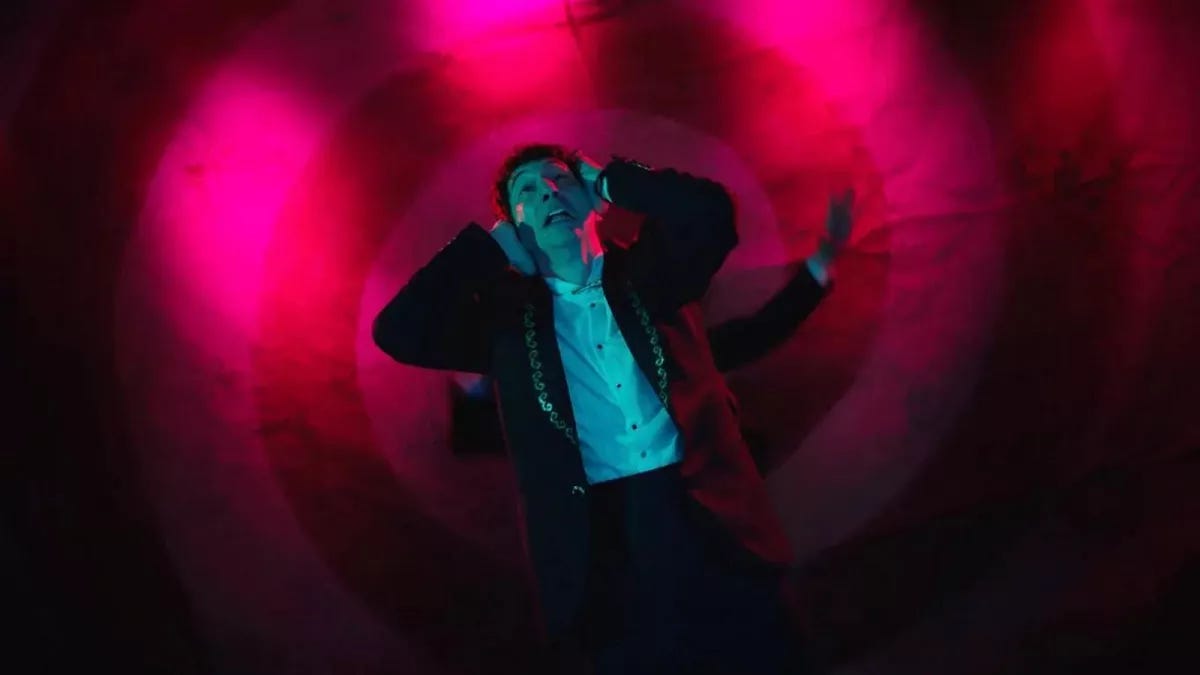
Much of the polarizing, hotly-anticipated (maybe only by Coppola) film is told in similar fashion-with psychedelic, flashy montages, the content of which includes but is not limited to; Hitler’s speeches, Nazi book burnings, the aftermath of 9/11, an admittedly impressive gymnastics show, Adam Driver being beaten senseless in a night club hallway, and visual effects so atrocious one has to believe that the **MOCK-UP ONLY, NOT FOR DISTRIBUTION** tag was cropped out.
Coppola is no stranger to montage, having deployed the technique to era-defining effect in The Godfather (1972) and Apocalypse Now (1979), however the significantly worse editing, appalling CGI and out-of-place intertextuality are unfortunately only some of the myriad problems which distinguish Megalopolis in such stark contrast to Coppola’s greatest hits.
The film tells the story of Cesar Catalina (Adam Driver), the head of the Design Authority of New Rome, an alternate future vision of New York, inspired by the Roman Republic (c. 509 BCE-27 BCE) that is ruled by a group of hyper-wealthy Patrician families while the rest of the Romans live in abject poverty.
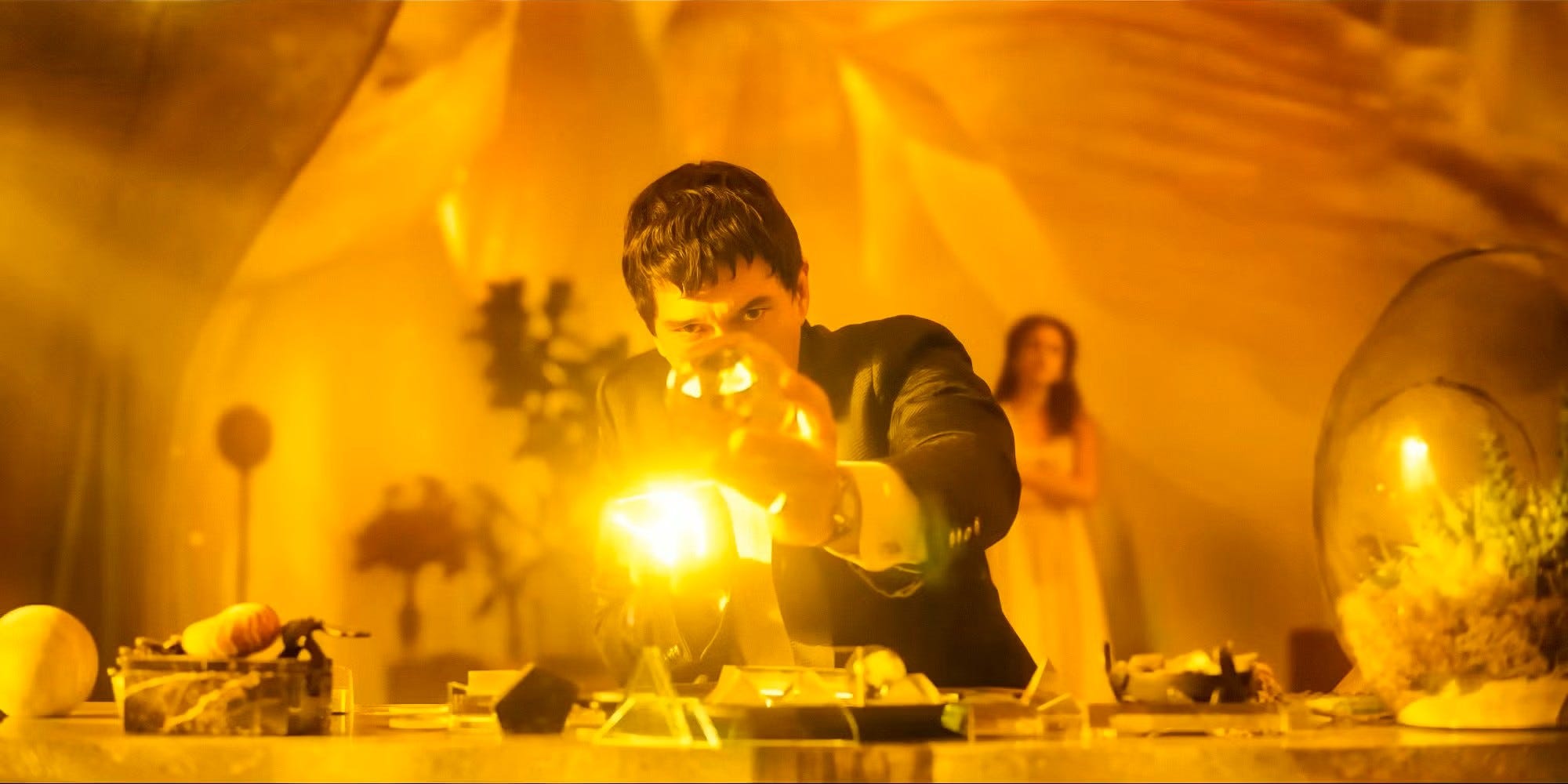
Cesar has a vision to build a new utopian city called Megalopolis, out of a mysterious material called he discovered called Megalon. This vision is strongly opposed by the current, very unpopular mayor of New Rome, Franklyn Cicero (Giancarlo Esposito) who is ostensibly in favour of more practical, immediate solutions for the city's misfortunate population, but who clearly is not acting on his rhetoric. This central conflict is further complicated by the fact that Cicero was the prosecuting DA who accused Catalina of murdering his wife, and by the fact that Catalina begins a relationship with Cicero's daughter, Julia (Nathalie Emmanuel). In a very Game of Thrones-esque chessboard of familial allegiances, Catalina's uncle, Hamilton Crassus III (John Voight) is the head of Crassus Bank and the richest man in the world, and marries TV Personality Wow Platinum (Aubrey Plaza), Catalina's manic obsessive mistress/girlfriend. A star-studded ensemble cast of supporting characters fills out the rest of the half-boiled world, including Jason Schwartzman, Laurence Fishburne, Shia LaBeouf, and Grace VanderWaal.
Make no mistake, as much fun as I had watching it, and as much as I recommend others see it, Megalopolis is not a good film. It is very, very bad. Even viewed charitably, in the context of the entire VFX team quitting halfway through, Coppola’s incredibly improvisational approach and the almost 50 years of development hell it endured, it is still a hot mess. It fails – in more ways than one. It’s message about the conflict between politics and art is woefully stymied by the barely intelligible script, it’s Ancient Rome meets Art Deco aesthetic would have felt outdated if it were released five years ago, let alone now, in our post-Great Gatsby, ultra-realist aesthetic landscape. The set design is cheap, the costumes are tacky, the score is dull, and the title cards look like a first-year graphic design student’s Photoshop exercises.

You can almost make out semi-interesting discussions it is trying to have about the rise and fall of empires, the appeal of dictators, and the constant tension between old and new—if you squint.
Oddly enough, as I was watching Megalopolis, I kept noticing similarities between it and another film I had rewatched exactly a week earlier—starting with the fact that they were both produced by Coppola.
Mishima: A Life in Four Chapters (1985) is a semi-biographical film about the life and work of Japanese writer, actor, bodybuilder, domestic terrorist and famous bisexual Yukio Mishima (1925-1970). It was directed and written by Paul Schrader, executively produced by George Lucas and Coppola, with an original score by Phillip Glass. It is split into four sections, with three short films that follow particular parts of three of his books (in order of the stories: The Temple of the Golden Pavilion, Kyoko’s House, Runaway Horses), and a throughline biopic element which follows Mishima from childhood to death, focusing especially on the last day of his life, which is presented in colour to differentiate from the earlier parts of his life, shot in black and white.
Small tangent: This symbolism connects his work and his death in an important way, which becomes clear if you know how he died. While his early years see him struggling to find his footing in the world and define his identity, and are usually shot in quotidian settings such as the schoolyard, army hospital and small domestic rooms, the three stories and his last day are shot in colour, with more extravagant, impressionistic costuming and set design, from the theatrical settings of the stories to the vivid colours of his uniform and his ostentatious mansion. This directly relates to the title of the ‘last day’ section, ‘Harmony of Pen and Sword’.
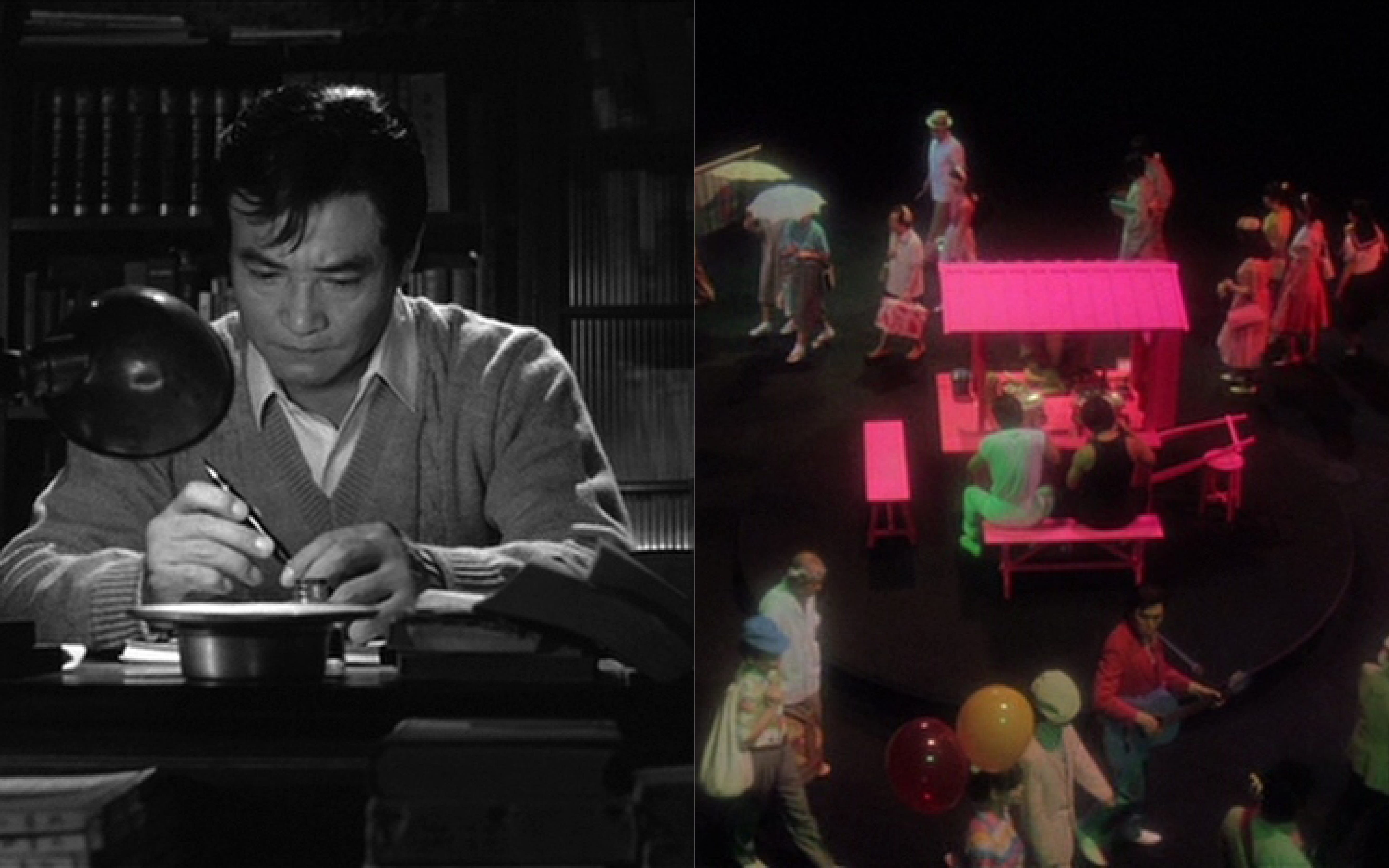
Despite being a Coppola project released almost 40 years prior to Megalopolis, the central themes have a striking similarity with one another.
Through the dramatisation of Mishima’s establishment of the Shield Society, a paramilitary association of young men loyal to the emperor, and the dramatisations of The Temple of The Golden Pavilion and Runaway Horses, A Life in Four Chapters discusses similar themes that Megalopolis hinted at—dictators, tensions between old and new, and the rise and fall of empires.
Both films are essentially concerned with the relationship between politics and art, between pragmatism and expression, between words and action. This struggle against society at large, and a desire to reshape the world as one sees fit forms the central conflict of the two films. The similarities extend from the thematic to the characters themselves as well.
Both protagonists, having risen to the zenith of their cultures and becoming highly regarded and respected, seek to rebel against the dominant sociopolitical forces of their time.
In Mishima this rebellion is his disdain for the position Japan finds itself in the 20th Century. The constitution which took power away from the emperor, the restriction of its army, and its embrace of the West in myriad ways, from industrial capitalism to western fashion. He also held beauty, discipline and youth in much higher regard than other values such as pluralism or progressiveness. This ideology was reflected as much in his art as in his life. He was a fanatical bodybuilder and once remarked that ‘we live in an age in which there is no heroic death.’
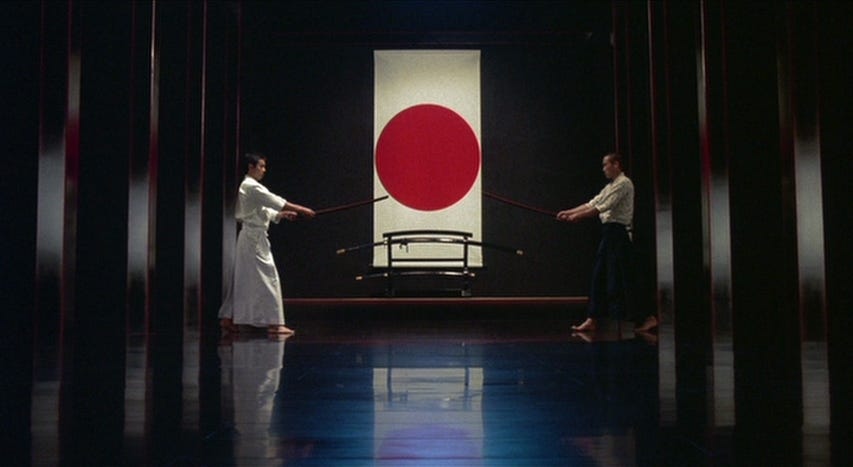
Faint echoes of this commitment to beauty, youth and a disdain for modernity can be observed in Megalopolis, from the oversized, collapsing, crumbling ancient Roman statues (one of the more weird and disconnected sequences in the film—and that’s saying a lot. Is it real? A dream sequence? A metaphor? Are they sentient? Why are they moving like people? I don’t know.) to the bizarre virginity cult/fan club of VanderWaal’s teen pop singer character.
Cesar and Mishima are extremely gifted men who sit at the top of their respective professions, whether that be urban design or literature. They are at once brilliant, intellectual and stoic, yet also far from perfect. Both Mishima and Cesar's ambitions drive them to insanity, straining their personal, professional and romantic relationships.
However, it is upon the conclusion of these two films and the resolution of the two conflicts that we see a fundamental difference between the two films and the two protagonists, made starker by a similar setting for both films’ final scenes.
The denouement of Megalopolis sees Cicero and Catalina’s conflict completely resolved. Crassus, Catalina’s unimaginably wealthy uncle, decides on his deathbed to donate his entire fortune to the construction of Megalopolis for the simple reason of getting back at his duplicitous wife Wow (Plaza) and his populist, Trumpian nephew, and Catalina’s cousin, Clodio Pulcher (LaBeouf) who both attempted a hostile takeover of Crassus Bank. It’s all coming up Cesar.
The final scene sees Mayor Cicero and his wife, Julia, Cesar, and their new baby Sunny Joy (I know right) waving and smiling at the public while atop a raised platform in the newly constructed Megalopolis. Despite the complete disdain the public had for these two men for the vast majority of the film’s runtime, all seems to have been resolved thanks to Cesar’s impassioned speech and just how damn good his new utopia is. In a final dollop of heavy-handed magical realism that Coppola seems to employ whenever the plot deems convenient, Cesar and Julia stop time and everyone freezes except for their new baby, Sunny Joy. The frame irises in on her crawling around and cooing before the audience is treated to a final title card with a sententious humanist rendition of the Pledge of Allegiance on it, recited by a children’s choir.
Wow.
In stark contrast is the ending of Mishima: A Life in Four Chapters. The final scene of Mishima also sees our main character standing on a raised platform, facing the public. However, the circumstances of this public audience could not be more different.
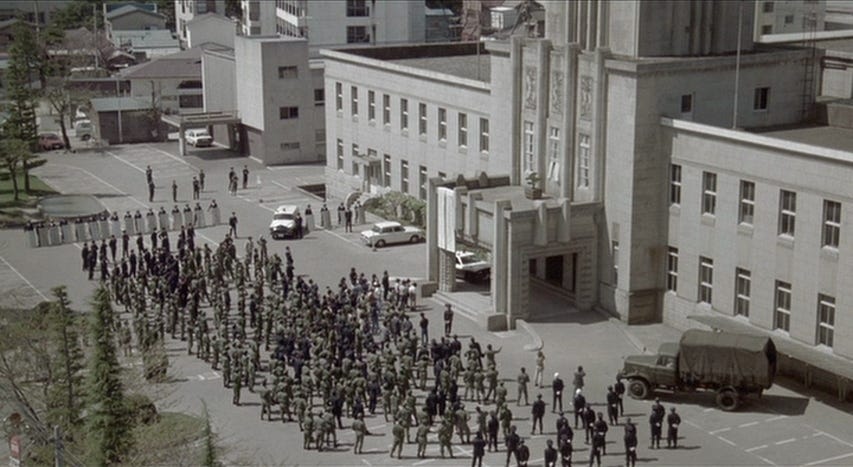
Mishima and his paramilitary organization, the Shield Society, take over a Japan Self Defence Forces base in Tokyo. Taking the general hostage, they demand the garrison assemble in front of the central command building for Mishima to address them. Here, with helicopters whirring loudly above him, being heckled by young, irreverent, bored soldiers, Mishima attempts to incite rebellion with his Make-Japan-Great-Again manifesto. He calls the army to action, to revolt against the modern ills of capitalism, globalism and liberalism, and to pledge allegiance to the emperor. No one listens to him; they can barely even hear him. All they see is a washed-up, delusional author in a costume, playing war games with his young acolytes. He speaks for five minutes before returning inside the military base and committing Seppuku on the floor of the general’s office, along with his second-in command.
If we set aside the cinematic flairs of time-stopping superpowers and the extremism of Mishima’s ideology and self-sacrifice, which ending is more relatable? Which ending speaks more to the human experience? Is it the all’s-well-that-ends-well, It’s a Wonderful Life, ride off into the sunset ending of Megalopolis that we’ve seen thousands of times, to the point that even critiquing it or satirising it is passe, or is it A Life in Four Chapters’ ending?
How many times have you felt that no one is taking you seriously? How many times in your life have you poured energy, work, and tears into a project, only to be rejected and thrown to the side?
To a much less extreme extent, Mishima’s ending, both in the real world and in the film, is one we can all relate to. His disappointment at the unwillingness of the garrison is relatable to anyone who’s ever told a joke that landed badly, presented an idea that was laughed at, or been ridiculed for having the wrong opinion. The jeers of the young soldiers are the haters in our Instagram comments, the email we get from the art competition, or the dream job, telling us ‘Unfortunately you were not selected.’ Ken Ogata, who plays Mishima in a sombre, reserved performance, expertly conveys the feeling of realising that everyone is laughing at you, not with you, that so many of us know so well.
Perhaps the most appropriate comparison we can make to Mishima is Coppola himself—an artist, beloved by the public, lauded by critics, who’s true passion is flatly rejected by the public, and who’s final project fails spectacularly.
After working on Megalopolis for the better part of fifty years, selling his wineries to fund the production, and self-releasing when no studio would touch it, his likely final film has bombed spectacularly, seeing a limited release and grossing just over $12 Million USD against its $120 million USD budget.
Sometimes we fail. Life is rarely like the ending of Megalopolis, with all loose ends tied up in a saccharine bow. Failure is a part of life, and, for different reasons, I think A Life in Four Chapters and Megalopolis are both meaningful and important media products as they both demonstrate to us, one unintentionally, what failure looks like. Public, embarrassing, unambiguous failure. They both grapple with the unfortunate truth that effort put in and energy expended do not equal brilliance, or influence, or success.
Hi everyone. It’s been a busy year. I’m not sure if I’ll be more consistent on here now that my life has settled into more of a routine, but when I have something to say that doesn’t fit in an Instagram Story create mode post, best believe it’ll be here.
So don’t you go changing.
Reading
On the Road – Jack Kerouac: Recommending this book in 2024 feels like showing up to the party at 3am when the host has not only cleaned up and taken out the bins but is just about to drift off to sleep. Of course it’s fantastic. It changed Bob Dylan’s life. Read it.
The Rules of Attraction – Bret Easton Ellis: This lesser-known novel by that podcast guy who wrote the Sigma Male book brought out the worst in me, but I couldn’t put it down. I love the shifting perspectives, unreliable narration, erratic, unfocused prose, and how depraved, hateful and unforgivable his characters are.
Bon Iver is Searching for the Truth - Amanda Petrusich: A thoughtful and revealing conversation with one of my favourite musicians about his fantastic recent EP.
Eating
Biang Biang: This CBD haven of Xi’an hand-pulled noodles is really a hidden gem. It’s so delicious and cheap that I hesitate to recommend it publicly, but thankfully this venerable masthead doesn’t have many readers, and we’re all friends here, so I am. Ever since I stumbled into the institution that is Xi’an Famous Foods in Chinatown, Manhattan on a freezing January day I’ve been infatuated by the cuisine of this region of China’s cuisine, and Biang Biang satiates my cravings for hearty, filling, fragrant noodles, dumplings and soup every time.
G.McBean Family Butcher’s Reuben: Living in Southern Inner-city Melbourne, I am even less inclined to cross the river than when I lived further from the big smoke. One of the things that makes it incredibly hard to leave is this butcher in Prahran Market, who’s Reuben sandwiches are almost psychedelically delicious. And before you ask, like a parent asked to choose their favourite child, I refuse to give my opinion on if they are better than the ones at Butchers Diner.
Thugger Kitchen: I have an Instagram account with my friend Laila where we have been posting our cooking, so check that out if you dare.
Watching
Bones and All (MGM, 2022): Halloween-appropriate nightmare fuel meets the Great American Road Trip meets Romeo and Juliet. Not for the faint of heart.
Matty Healy on the Doomscroll Podcast: It was only a matter of time before I mentioned him.
English Teacher (FX, 2024): Brian Jordan Alvarez proves he is so much more than a really good Australian accent. Absolutely, laugh-out-loud hilarious. High recommend.
Listening
SABLE, - Bon Iver: See above.
The Shape of Punk to Come – Refused: Any hardcore punk fans will know that like On The Road I’ve hopped on this train way too late, considering Swedish band Refused broke up almost 30 years ago. Still an incredible album which manages to incorporate hardcore sound with jazz, techno and ambient to create an angry, wild, fascinating listen.
The Hellp – LL: Out of the post-hyperpop, indie sleaze, EDM inspired movement of artist loosely based around LA, The Hellp are among the most innovative. on LL they combine their typical Americana image which they’ve become known for with early techno soundscapes, analogue synthesizers, catchy melodies and more emotional depth than their previous work to create one of the most interesting albums of the year.
nate sib: Another artist associated with the LA Scene and The Hellp, I cannot get enough of nate sib’s Justin Beiber-y, football jersey-clad electro pop. It may not be for everyone but he’s on repeat for me.
Osm – Suichu Spica: A beautiful album which has spurred my semi-relapse back into math rock obsession. I’ve been listening to yourboyfriendsucks!, Chinese Football, or my global math rock report playlist for more music in this vein.
bye :P
Nice L post bro